

The basics2 min read
Speed to lead: why replying in five minutes changes everything
“Speed to lead” is one of the most repeated ideas in sales. It is also often misquoted. Here is what the evidence says, what it doesn’t, and what a small business can realistically do.
#What the research says
Two things to keep in mind. First, the 21× figure is about the odds of qualifying a lead, not contact rate and not sales, and the study’s own author found large differences between industries. Second, both pieces of research are old. The direction is well supported; the exact multiple is not something to promise anyone.
#Why small businesses lose the race
- The enquiry arrives when you are with a customer, driving, or asleep.
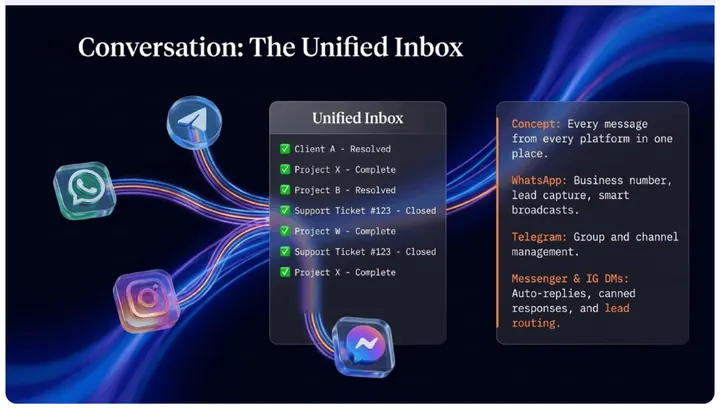
- It lands in one of five places — phone, WhatsApp, Instagram, email, website form — and you check them at different times.
- Nobody owns “reply to new enquiries”, so it happens when someone remembers.
#A realistic target
You do not need to be instant at 3am. You need a first reply that is fast, useful and honest — in minutes — and a clear next step. A good first reply does four things:
- 1Acknowledges the specific enquiry
Not “thanks for contacting us”, but the thing they asked.
- 2Answers the obvious question
Price range, availability, or what happens next.
- 3Asks one qualifying question
So the conversation moves, and you learn whether it is a good fit.
- 4Offers a booking link
So the next step needs no back-and-forth.
#How to get there
| Approach | Realistic reply time | Cost to you |
|---|---|---|
| You, between jobs | Hours | Your evenings |
| A shared inbox and a rota | Minutes in office hours | A person’s time, every day |
| An AI employee with a person supervising it | Seconds to minutes, any hour | Setup, then a monthly service |
With an AI employee the first reply is drafted in your tone from information you approved, the lead is scored, and the booking link goes out — and anything it isn’t sure about goes to a person with the context gathered. See how follow-up works or book the free audit.
Keep reading
 The basics
What is an AI employee? (And how it differs from a chatbot)
An AI employee does ongoing work across your channels — replies, follow-ups, bookings, posts — inside rules you set. Here is how it differs from chatbots and automations.
 The basics
What a missed call really costs a small business
A worked way to put a number on missed calls, slow replies and after-hours enquiries — and the cheapest fixes, from voicemail rules to an AI receptionist.
 The basics
The five levels of AI automation for a small business
From a website and contact form to a full AI employee: a practical ladder of five levels, so you can see where your business is today and what the next step is.